2025-12-03 / 01월호 지면기사
/ 한상민 기자_han@autoelectronics.co.kr
.jpg)
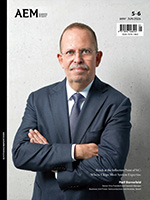
INTERVIEW
Lulu Ranne
Minister of Transport and Communications of Finland
Finland has long been recognized as a Nordic innovation leader, spearheading advancements in next-generation communications, digital infrastructure, and sustainable transport policy. This interview offered a rare opportunity to hear directly from the key figure driving that national agenda - Minister Lulu Ranne - on the strategic significance of Finland’s initiatives in 6G, AI, autonomous mobility, and digital infrastructure. AEM set out to explore what new horizon may unfold when Korea’s global strengths in automobiles, semiconductors, telecommunications, and batteries intersect with Finland’s ecosystem of software excellence, connectivity innovation, and sustainability-driven technologies. Here is that conversation.
By Sangmin Han_Han@autoelectronics.co.kr
한글로보기
To AEM and our readers, Finland is recognized for its mobility innovations such as MaaS Global - despite its bankruptcy - and the remarkable achievement of “Zero Fatalities” in Helsinki. Among Finland’s recent accomplishments in transport and communications, which do you personally take the greatest pride in?
Ranne Finland is a sparsely populated country with long distances and hard weather conditions. 90% of our inhabitants and cargo tons are moved on rubber wheels and that is the way it will be in the future too. The road network truly is the backbone Finland.
I am very proud to say that during this government term we have steered the transport policy of Finland towards a new direction. We are investing 3,3 billion euros into transport infrastructure, from which nearly 2 billion is directed towards roads. This is over 2,5 times more than the previous government. With this investment we have been able to slow down the growth of the maintenance backlog of our roads, which is a huge challenge in Finland.
The numerous projects on our roads, highways and bridges support Finnish commerce, logistics, industry and civilians, as well as improve traffic safety and bring forth significant advancements in military mobility, which is now more important than ever.
Many of our military mobility projects have also received significant EU funding, but this is only the beginning. We are heading towards future development with great ambition.
On top of infrastructure projects, I am also so happy and proud of our other ongoing work in traffic safety, including the reform of driver's licenses, the safety of young and new drivers, and our goals and ideas on the upcoming implementation of the EU driver's licenses directive. The zero fatalities is a goal not just in Helsinki, but in all of Finland: 0 deaths in traffic by the year 2050. Our goal is that every road user gets back home safely every day.
Finland’s Transport Policy and Digital Transformation Strategy
Finland is currently taking a unique approach by integrating 6G, AI, autonomous driving, and digital infrastructure into a single industrial ecosystem. What are the key objectives of this ‘Mobility - Connectivity Integration Strategy’? Would you say its essence lies in safety or in industrial competitiveness - and how do you see those two values being balanced?
Ranne Finland is committed to advancing digital technologies and solutions across all areas of the society. The current Government program emphasizes full utilization of digitalization, particularly through promoting automation and data-driven innovations in the transport and logistics sectors.
Safety and competitiveness are values that Finland tries to balance, as they are also mutually beneficial.
I believe that connectivity and data utilization are essential parts of digitalization and automation in transport. To make future mobility safer, more efficient, and more ecological, we need AI-powered data utilization enabled by 6G networks. At the same time, cybersecurity is crucial. Our “security by design” approach ensures that safety and trust are built into every layer of the system from the very beginning.
Ultimately, technology is a tool to achieve broader transport system objectives that our citizens can benefit from, such as safety, efficiency, and sustainability.
You have described 6G as “the core infrastructure of the circular economy.” In that context, how do you believe such technological convergence - of 6G, AI, and autonomous mobility - will transform the automotive industry’s paradigm shift toward Software-Defined Vehicles (SDV), automation, and sustainability?
Ranne As a result of combining 6G networks, AI, and autonomous driving, the automotive sector is indeed undergoing a paradigm shift as profound as the original transition from horses to cars. The technological development of vehicles is the driver of this change, but its greatest impact is not on the automotive industry. It is on people, on each of us. The solutions must be good for every day life, affordable and safe.
In Finland, we strongly believe that connectivity and data utilization are essential parts of the digitalization and automation of the transport sector. The mere development and utilization of vehicle’s own sensors and automation systems will not be enough to achieve better mobility in the future. To make future transportation safer, more efficient, and more sustainable, we need AI-powered data utilization enabled by 6G networks.
This paradigm shift can have a significant improvement in quality of life. The time currently spent on driving can be used for more meaningful activities, and autonomous vehicles can improve mobility services for special groups and in sparsely populated areas. Driver-assistance systems have already enhanced traffic safety, and we can expect even greater improvements in the future. However, it is important to remember that reaching the desired future also requires guiding and enabling the right developments for example by legislative measures.
A New Horizon for Finland - Korea Mobility Cooperation
As you know, Korea has global strengths in automobiles, semiconductors, telecommunications, and batteries.
What kind of collaboration synergies do you foresee when these capabilities meet Finland’s innovation ecosystem?
Ranne Korea’s global leadership in automobiles, semiconductors, telecommunications, and batteries creates a powerful foundation for collaboration with Finland’s innovation ecosystem, which is renowned for its strengths in software, connectivity, and sustainable technologies. When converged, these capabilities can create synergies that accelerate the development of Software-Defined Vehicles, next-generation battery systems, and ultra-reliable 6G networks. Finland’s expertise in edge computing, AI, and cybersecurity can complement Korea’s hardware and manufacturing excellence, enabling holistic solutions for autonomous mobility and smart energy management. Together, these ecosystems could provide a shared base to pioneer sustainable transportation models, integrate circular economy principles, and create globally scalable platforms that redefine mobility and connectivity. This collaboration would not just be about technology, but it would assist shaping a future where innovation drives societal progress and environmental responsibility.
Finland’s Hashlist visited Korea, and AEM has already built long-standing ties with several Finnish automotive technology companies such as Sensible 4, TactoTek, Basemark, and Qt. From large players like Valmet Automotive to emerging startups, what kind of automotive ecosystem is Finland shaping, and how does your ministry promote cross-border and cross-industry collaboration within it?
Ranne Finland’s automotive ecosystem is evolving toward software-driven, sustainable mobility solutions. Our aspiration is to combine the strong expertise in electric vehicle manufacturing, which has already been established, with innovative startups and user interface technologies. This combination creates an agile environment where hardware and software innovation go hand in hand. Our ministry (Ministry of Transport and Communications) strives to create the right conditions, which facilitate cross-border and cross-industry collaboration enriched by joint research programs, innovation funding, and networking platforms that connect automotive players with ICT, energy, and design sectors.
The Finns are a nation of technology enthusiasts who are eager to adopt and experiment with new devices and applications. We are engineers at heart. Our fundamental view is that the policy makers should not pick winners, which is why, for example, technological neutrality is an important principle for us.
One of Finland’s long-standing strengths has been our enabling and forward-looking legislation. We apply the same approach towards, for example, vehicle trials on public roads. In this respect, testing related to autonomous vehicles is based on legislation that is highly permissive. Since the Finnish weather conditions are very challenging for autonomous vehicles, ensuring that systems work in Finland, will likely guarantee their functionality anywhere else in the world.
By linking these Finnish strengths with Korea’s leadership in automotive production and advanced components, it is possible to accelerate the development of next-generation mobility solutions that are globally competitive, affordable and environmentally responsible.
Finland is widely regarded as a European leader in AI and quantum computing research - fields that are rapidly gaining attention across the mobility industry. How do you expect these two technologies to reshape efficiency and safety in future transportation, logistics, and autonomous systems?
Ranne Finland is committed to advancing digital technologies and solutions across all areas of the society. The Government’s program emphasizes the full utilization of digitalization, particularly through promoting automation and data-driven innovations in the transport and logistics sectors. Finland aims to remain a frontrunner in automation, supported by a comprehensive action plan that covers all modes of transport.
In road transport, ongoing regulatory reforms place Finland among the pioneers of automation, and Finnish companies are already developing new transport services based on automated technologies. Beyond automation, Finland is investing in digital capabilities that enable proactive maintenance and smarter development of the transport infrastructure.
Efficient data exchange through advanced mobile networks forms a cornerstone in this digital transition. At the same time, cybersecurity is treated as a key priority: Finland’s “security by design” approach ensures that safety and trust are built into every layer of the system from the very beginning. The Government also seeks to strengthen the functioning of the transport services market, foster new business models, and enhance system-wide efficiency. In rail transport, modernization efforts such as upgrading train control systems to full digitalized solutions are underway.
Transport technologies are ultimately tools to achieve broader objectives set for the transport system, such as safety, efficiency, and sustainability. It remains difficult to predict exactly how and where implementation of technologies such as artificial intelligence and quantum computing will become mainstream. What is clear, however, is that their adoption will inevitably expand through strong public - private partnerships, where innovation, regulation, and implementation evolve hand in hand.
Future Technologies
and the Joint R&D Vision Between the Two Countries
In future industries such as automotive, semiconductors, AI, 6G, and quantum computing, international cooperation and talent exchange will be crucial. Are there any plans or visions for joint R&D programs or researcher mobility initiatives involving Korean and Finnish universities, institutes, and industry partners?
Ranne Since 1989, Finland and South Korea have had an Agreement on Scientific and Technical Cooperation, which creates a framework for our cooperation in these areas. It is coordinated by relevant ministries in both countries. Even funding agencies under Finnish ministries have established cooperation frameworks with Korean partners, and reviewing the results and discussing future collaboration areas, alongside RDI policy dialogue, are key elements of the follow-up meetings under the agreement.
Our cooperation in science and technology has deepened even in recent years, and we are very pleased with that. For example, the number and quality of joint scientific publications between Korea and Finland have increased. Most joint publications are made in the fields of natural sciences, engineering, as well as medical and health sciences.
Moreover, the Research Council of Finland has a funding cooperation agreement with South Korea’s National Research Foundation. The agreement is valid until 2030 and offers support for joint research projects between Finnish and Korean researchers. Under this framework, a joint call was organized in 2024 with a focus on 6G and quantum technologies research.
Increasingly, Finnish higher education institutions are seeking to establish or strengthen cooperation with Korean partners. Some examples include:
The University of Helsinki signed a strategic partnership agreement with Yonsei University in April 2025 with an aim to increase research collaboration and opportunities for students and staff from both universities.
Korean Electronics and Telecommunications Research Institute has been one of the first international partners of University of Oulu’s 6G Flagship program since 2018.
In 2024, University of Oulu also deepened its collaboration with Yonsei University and Korea Advanced Institute of Science and Technology in 6G Flagship areas.
Aalto University has actively collaborated with Yonsei University since 2001, including topics such as cloud services for 6G networks.
In addition, the Finnish CSC (IT Center for Science), a state-owned company serving universities and research institutions, has a cooperation agreement and high-performance computing infrastructure collaboration with Korea Institute of Science and Technology Information.
We believe there is even more room for collaboration. To facilitate this, the Finnish Ministry of Education and Culture and Finland’s Embassy in Seoul have for instance organized roundtable events for the sector, presenting Korea’s higher education and research system as well as cooperation opportunities under the Horizon Europe program.
Finally, what is your long-term vision for Finland - Korea cooperation in transportation, communications, and AI? And could you share a closing message with AEM’s readers in Korea and beyond?
Ranne I am happy to say that Finland and Korea share excellent relations and we have a long history in working together.
Both of our countries have a strong focus on research and development and have similar strengths in the fields of telecommunications and digital technology. This makes cooperation between our countries a natural fit, and we look forward to further opportunities to collaborate and learn from each other.
As already mentioned, we have good cooperation for example in 6G research. In Finland’s international cooperation, the aim of advancing secure, meaningful connectivity holds special importance. International collaboration between likeminded countries is a key, for example, to ensure that future networks reflect our values. I am pleased to note that Finland and South Korea have also had fruitful collaborations in this regard.
I believe we have great potential for further collaboration in many sectors. Our countries are likeminded and committed to positively shaping the future. I believe that the partnership between South Korea and Finland is not only about scientific and technological advancements, but also about creating new business opportunities for our companies and economies and better well-being for our citizens.
We are always eager to discuss how to further strengthen our mutual cooperation. I believe we can support and learn from each other in the field of digital transformation and in developing technology for more sustainable and effective transportation systems.
By working together, we can continue to drive innovation and push the boundaries of what is possible in the field of technology. I am confident that our countries will continue to be leaders in these fields for many years to come.
AEM(오토모티브일렉트로닉스매거진)
<저작권자 © AEM. 무단전재 및 재배포 금지>



.jpg) [ICS] 10BASE-T1S 무료 교육 (매월 둘째 주 금요일)
[ICS] 10BASE-T1S 무료 교육 (매월 둘째 주 금요일)