2026-06-22 / 07월호 지면기사
/ Sarada Vishnubhatla_sarada@autoelectronics.co.kr
.jpg) INTERVIEW
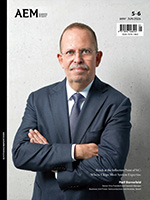
Dr. Matthias Traub
President of Vector Informatik GmbH
INTERVIEW
Dr. Matthias Traub
President of Vector Informatik GmbH
By Sarada Vishnubhatla _sarada@autoelectroncis.co.kr
한글로보기
Related Story: The Shift from Engineering Vehicles to Engineering Intelligence
Q: The concept of Software-Defined Vehicles has been at the centre of the automotive industry's vision for several years. Yet, across markets, there still appears to be a gap between the ambition of SDVs and their large-scale realization in production vehicles. Given your close engagement with both OEMs and Tier-1 suppliers globally, where do you believe the industry currently stands in this transition? And what, in your view, is the most underestimated barrier preventing the vision from translating into execution?
A: Most OEMs today have a fairly clear vision of what a Software-Defined Vehicle should look like from a technical standpoint. The industry has broadly aligned around concepts such as zonal architectures, centralized computing platforms, and robust over-the-air (OTA) update capabilities. While some OEMs have made significant progress, others are still working towards these capabilities. The real challenge lies in translating this vision into series production at scale.
In my view, the most underestimated barrier is not the technology itself, but the operating model. Successfully delivering SDVs requires OEMs to take ownership across the entire software development lifecycle, establish clear governance structures, and redefine responsibilities across the ecosystem. The traditional relationship between OEMs and suppliers is evolving, and organizations are having to adapt accordingly.
Established automotive players are also dealing with significant legacy constraints. Decades of accumulated vehicle variants, software complexity, and siloed development processes can slow transformation efforts. Historically, domains such as ADAS, infotainment, and body electronics were developed independently. With the move toward high-performance computing platforms, these functions are increasingly integrated onto common architectures, demanding new ways of working and much closer cross-domain collaboration.
Ultimately, the industry's challenge is not defining the SDV vision—it is adapting organizations, processes, and partnerships to make that vision a production reality.
The First Requirement for AI-Defined Mobility: Validation
Q: In ADAS and autonomous driving development, some AI applications are already delivering clear gains in areas such as perception, simulation, and engineering productivity, while others remain works in progress. From your perspective, where is AI creating real value today, and where is it still largely hype?
A: AI is already delivering significant productivity gains across software engineering workflows, including log analysis, issue triaging, test generation, and other development activities. Within ADAS, AI has become a core technology. Most leading developers have moved away from purely rule-based algorithms toward AI-driven approaches based on neural networks, enabled by the latest generations of high-performance automotive computing platforms.
However, there remains a gap between expectations and reality when it comes to proving safety and correctness at scale. Corner cases, coverage arguments, end-to-end validation, and safety evidence continue to be major challenges. These are areas where deep domain expertise and experienced engineers remain indispensable.
Overall, I see AI as an accelerator rather than a replacement for engineering responsibility. Human expertise remains essential. Organizations must therefore invest in training and upskilling engineers so they can effectively supervise, validate, and collaborate with increasingly capable AI and agentic systems.
Q: Automotive safety standards have traditionally been built around predictability, traceability, and verifiability, whereas AI-based systems are inherently probabilistic and non-deterministic. Do you see these two paradigms as fundamentally at odds, or is the industry finding practical ways to reconcile them? And how is Vector evolving its toolchain, testing, and validation approaches to support the safe deployment of AI-driven systems?
A: Traditional automotive safety engineering and AI-based systems is an upcoming context that the industry is addressing by separating learning-based components from deterministic safety mechanisms and introducing safety envelopes, monitoring functions, and fallback strategies.
At Vector, we are evolving from purely scenario-based validation toward more data-driven approaches while maintaining alignment with established safety standards. A major focus is ensuring that evidence remains reproducible and traceable—from training data and model configurations through to the outputs generated by AI systems.
Governance in the Era of Responsibility and OTA Updates
Q: As vehicle decision-making increasingly relies on learned models rather than predefined rules, accountability also becomes more complex. In the event of an incident, how should responsibilities be defined across OEMs, suppliers, and technology providers?
A: The overall system responsibility and final release decisions will continue to rest with the OEM. Suppliers remain responsible for the components and technologies they deliver, while technology and tool providers contribute capabilities around validation, traceability, testing, and development support.
What is changing is the nature of collaboration. The traditional boundaries between OEMs, suppliers, and technology partners are becoming less rigid, requiring much closer cooperation throughout development, validation, and lifecycle management.
Increasingly, we are seeing integrated teams where engineers from OEMs and technology providers work together rather than in isolation. I believe this collaborative model will become the blueprint for future software- and AI-driven vehicle development.
Q: As vehicles become increasingly software-defined, they continue to evolve long after they leave the factory. OTA updates for AI-enabled systems introduce new challenges around safety, cybersecurity, compliance, and regulatory approvals. Do you believe the industry is adequately prepared for this shift? And how is Vector helping OEMs manage these growing complexities?
A: Industry readiness varies, but the larger challenge is often governance rather than technology. Key questions that need to be addressed are - who approves software changes? What evidence is required before deployment? How should safety and security be validated? And what rollback mechanisms should exist if something goes wrong? These are among the most important challenges the industry is working through today.
At Vector, we help customers establish robust update and governance frameworks. This includes managing safety and cybersecurity artefacts, ensuring secure software supply chains, maintaining signed releases, and providing complete software traceability. OEMs need visibility into exactly which software version is running on a specific vehicle configuration and how updates can be deployed safely throughout the vehicle lifecycle.
Achieving this requires a robust end-to-end toolchain that combines software traceability, governance, safety, and cybersecurity throughout the vehicle lifecycle. Our role is to support customers through this transformation by combining deep automotive domain expertise with AI-enabled solutions spanning development, deployment, and ongoing vehicle operations.
Q: As OEMs increasingly bring software development in-house, how is the role of technology providers like Vector evolving? And how do regional dynamics differ across markets such as South Korea and India?
A: We are seeing a clear trend, particularly in markets such as South Korea, toward OEMs taking greater ownership of software development. As a result, our role is evolving from that of a traditional engineering supplier to a provider of the software foundation that enables scalable, end-to-end software development.
We deliver an intelligent software ecosystem that connects development, integration, validation, and operation across the entire lifecycle. It gives our customers the freedom to decide which capabilities they want to develop internally and where they want support from partners—while relying on a consistent foundation that ensures interoperability and makes compliance expertise and integration support an integral part of software development. Our approach integrates seamlessly into different workflows, processes, and organizational models and can be tailored to specific needs ensuring both consistency and flexibility.
Regional dynamics vary significantly. South Korea is shaped largely by the strategy of a dominant OEM, creating a relatively unified ecosystem. India, by contrast, is far more diverse, with OEMs and global players pursuing different software strategies. This requires greater flexibility, but also creates significant opportunities as India continues to strengthen its position as a global automotive software and engineering hub.
India Is Becoming a Global Hub for Automotive Software
Q: As AI and software-defined mobility reshape the automotive industry, engineers' roles and organizational structures are evolving rapidly. How is Vector experiencing this transition internally, and what changes are you observing among your customers?
A: We are seeing a significant shift in the skills and roles required across software development organizations. As more development activities become automated or agent-assisted, the importance of systems engineering, software architecture, data engineering, validation engineering, and MLOps is increasing. Engineers are moving beyond executing individual tasks toward orchestrating and validating entire development workflows.
As a result, closer collaboration between software development, cybersecurity, and functional safety teams is becoming essential.
At Vector, this transformation is driving both organizational and workforce changes. Alongside a significant investment in upskilling, we are evolving from a structure centered around individual products toward a more integrated, cross-functional model that supports seamless software development across the entire lifecycle.
We are seeing a similar shift among our customers. OEMs and suppliers alike are investing heavily in AI, agentic workflows, and systems engineering capabilities. One interesting observation is that newer software-centric players often prioritize speed and agility, but sometimes underestimate the complexity of automotive safety, cybersecurity, and regulatory compliance.
Q: How does Vector define its role going forward—globally and in India? Do you see the company taking on greater system integration responsibilities over time?
A: We do see ourselves taking on greater system integration responsibilities, particularly in SDV-related domains such as zonal architectures and high-performance computing platforms. However, our focus is not on integrating the entire vehicle stack. Areas closer to sensors, actuators, and certain hardware domains will continue to be served by other ecosystem partners, including Tier-1 suppliers.
India is especially important in this journey. Beyond being a significant automotive market, it is increasingly becoming a strategic engineering and innovation hub for both Vector and many of our customers. As software-defined mobility continues to evolve, India will play an increasingly important role in shaping the next generation of automotive software and engineering capabilities.
.jpg) Left to Right - Dr. Vinod Venkateswaran, Krishnananda Shenoy, Dr. Traub, Raghavendra K A, Brahmanand Patil.
A New Hub for Software-Defined Mobility: Infosys and Vector Unveil Mobility CoE
Left to Right - Dr. Vinod Venkateswaran, Krishnananda Shenoy, Dr. Traub, Raghavendra K A, Brahmanand Patil.
A New Hub for Software-Defined Mobility: Infosys and Vector Unveil Mobility CoE
The Mobility Center of Excellence (CoE) – a strategic collaboration between Infosys and Vector Informatik was inaugurated by Dr. Matthias Traub, President & Managing Director, Vector Informatik GmbH, recently.
The CoE at Infosys Campus in Electronic City Bengaluru is designed to accelerate SDV development by combining expertise in cloud and edge technologies, integrated vehicle and cloud platforms, advanced testing and validation, besides software factory solutions.
The CoE will enable faster and more efficient development through capabilities such as HIL/SIL testing, automated validation frameworks, engineering services, and cutting-edge toolchains, empowering automotive organizations to drive innovation, improving software quality, and reduce time-to-market for next-generation mobility solutions.
INTERVIEW
Brahmanand Patil
President of Vector Informatik India
Speaking from the vantage point of the Indian market, Brahmanand Patil offered a grounded view of how global automotive technology trends are being translated into local realities. Our discussion focused on India's growing role in automotive software innovation, the evolution of engineering talent and organizational structures, lessons from large-scale SDV programs, and the opportunities and challenges facing OEMs as they navigate the next phase of software- and AI-driven mobility.
By Sarada Vishnubhatla _sarada@autoelectroncis.co.kr
Q: India has traditionally been viewed as a global engineering hub for automotive software. As AI-driven development accelerates, what unique strengths can India leverage to emerge as a leading centre for next-generation automotive software and AI innovation?
A: India's biggest advantage is the depth and diversity of its engineering talent. The country has built strong capabilities across embedded systems, software engineering, cloud technologies, high-performance computing, and AI. What makes India uniquely positioned today is the opportunity to combine these skills and create solutions that span the entire software stack.
We are also seeing an important evolution within Global Capability Centres. Many have moved beyond execution-focused work and are now contributing to architecture, product design, and innovation. This shift allows India to play a much larger role in shaping the future of automotive software rather than simply supporting global programs.
From Execution Hub to Innovation Hub
Q: India today hosts engineering centres for most global OEMs, Tier-1 suppliers, and technology companies. In such an environment, how does Vector India help customers stay ahead of rapidly evolving software and mobility trends?
A: A key part of our role is bringing global knowledge into the Indian ecosystem. Because Vector works closely with automotive companies worldwide, we have visibility into emerging technologies, development practices, and industry challenges across regions.
Customers increasingly look to us not only for tools and solutions but also for insights into how the industry is evolving. Our close connection with Vector's global engineering and product teams allows us to act as a bridge between global innovation and local implementation.
Q: Many SDV discussions focus on technology, but execution often determines success. Can you share an example that illustrates what it takes to make an SDV program work in practice?
A: One of the strongest lessons we learned came from a major SDV program that an Indian OEM, undertook. The objective was not just to develop a vehicle, but to build a future-ready software architecture.
What stood out was their clarity of vision and the willingness to bring the entire ecosystem together. Technology partners, suppliers, and engineering teams worked collaboratively from the early stages, openly discussing architecture decisions, dependencies, and challenges.
The focus was not simply on introducing technologies such as Ethernet connectivity or OTA capabilities. The OEM wished to create an architecture that could scale over time and support future requirements. Equally important was the culture of collaboration, where key stakeholders regularly came together to solve problems collectively rather than in silos.
The experience reinforced a simple point: successful SDV transformation is as much about people, processes, and collaboration as it is about technology.
Q: As India moves toward software-defined vehicles, where do you see the biggest capability gaps today—and how can the ecosystem bridge them?
A: I don't see a shortage of talent. The capabilities already exist across embedded software, AI, cloud platforms, and high-performance computing. The bigger challenge is bringing these disciplines together and enabling modern software development practices.
Embedded software engineers need greater exposure to cloud-native and DevOps approaches, while AI and software engineers must understand the realities of safety-critical automotive systems. The opportunity lies in creating more cross-functional teams and development environments where these skills converge.
Success Depends More on Execution Than Technology
Q: With growing complexity across ECUs, connectivity, and AI-driven features, how is Vector India helping OEMs and Tier-1 suppliers accelerate development without compromising safety, quality, or compliance?
A: Our biggest strength is the combination of global expertise and local engagement. Customers in India benefit not only from Vector India's capabilities but also from the experience, tools, and engineering knowledge available across Vector's global organization.
At the same time, we understand the unique characteristics of the Indian market—from passenger vehicles to two-wheelers, three-wheelers, and last-mile mobility platforms. By combining global best practices with local market understanding, we help customers accelerate development while maintaining the safety and quality standards required in automotive software.
Q: India remains a cost-sensitive market. How do you balance cost expectations with the need for sophisticated software platforms and development tools?
A: Though cost is part of the discussion, increasingly customers are looking at total cost of ownership rather than upfront investment alone. Reliable software reduces testing effort, minimizes field issues, lowers recall risks, and improves long-term maintainability. Once customers evaluate the full lifecycle impact, the conversation typically shifts from cost to value.
Our approach is to remain flexible—whether through phased adoption, tailored deployment models, or program-specific support—while helping customers build a roadmap that balances affordability with long-term competitiveness.
Q: What role is India beginning to play in shaping innovation within global automotive organizations?
A: India is increasingly becoming a source of innovation rather than simply an execution centre. Engineering teams here are contributing ideas, architectures, and solutions that are influencing programs globally.
We have seen locally developed engineering solutions and test systems being adopted by global teams and replicated across regions. That reflects both the maturity of the Indian automotive software ecosystem and the growing confidence that global organizations have in Indian engineering capabilities.
As this trend continues, India will play an increasingly important role in defining the future direction of automotive software and mobility technologies.
.jpg)
AEM(오토모티브일렉트로닉스매거진)
<저작권자 © AEM. 무단전재 및 재배포 금지>



.jpg) [ICS] 10BASE-T1S 무료 교육 (매월 둘째 주 금요일)
[ICS] 10BASE-T1S 무료 교육 (매월 둘째 주 금요일)